
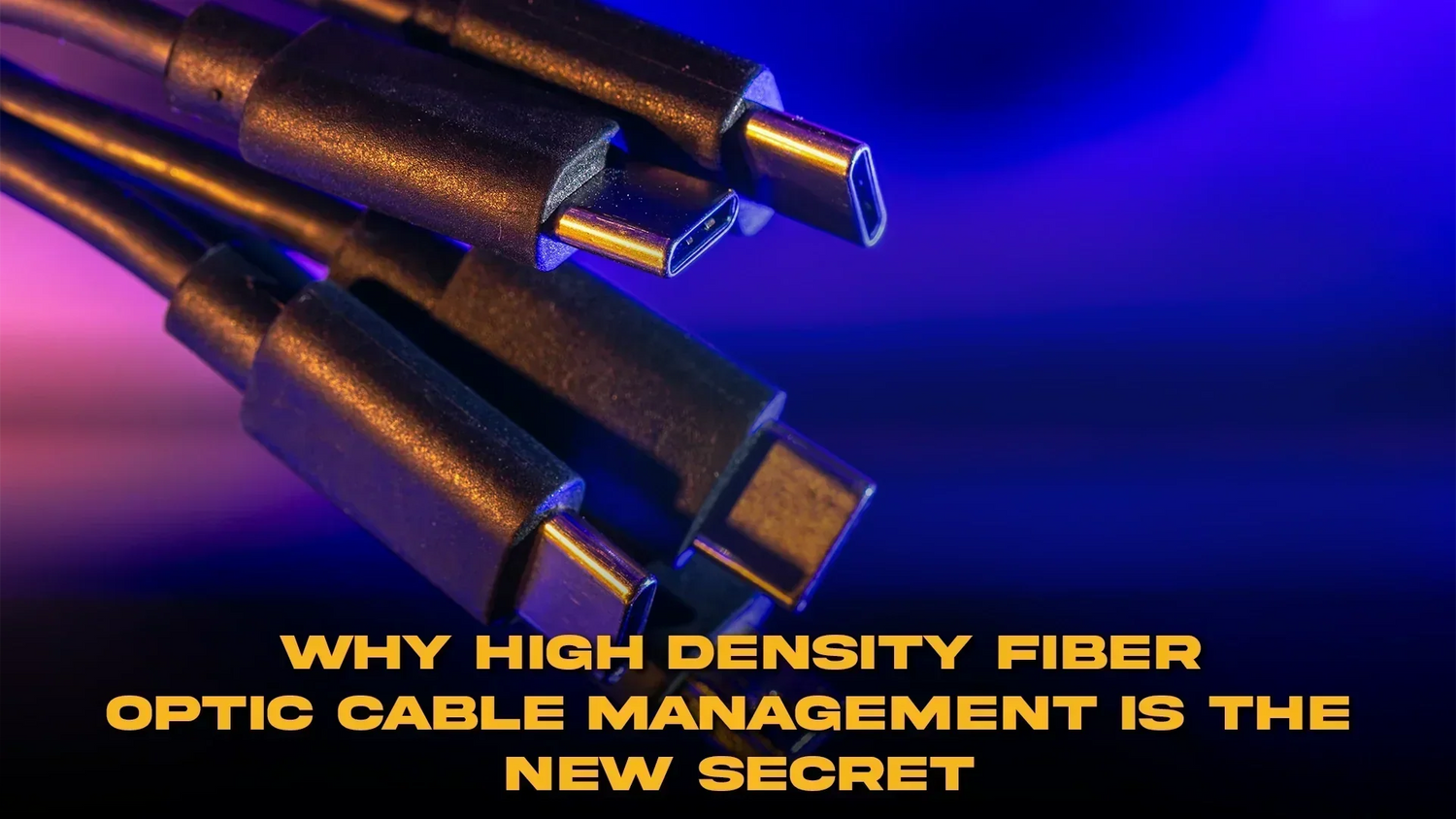
Walking into a data center today feels more like entering a high end weaving studio than a computer room. High density fiber optic cable management is the invisible thread that keeps our modern world spinning at the speed of light. Without these organized systems, the sheer volume of glass threads would turn into a hopeless, glowing nest of frustration. It is honestly amazing how much data we can cram into a single strand of glass, but that power comes with a very delicate catch. If you treat these cables like old fashioned copper wires, you are going to have a very bad day and some very slow internet.
In 2026, as we push toward even crazier speeds, the way we house these fibers is becoming a total art form. It's about being gentle, being organized, and being smart about how we use every single inch of space inside the rack. When high density fiber optic cable management is done right, it looks like a beautiful, synchronized dance of light and glass. It is a win for the engineers, a win for the business, and a win for everyone who just wants their Netflix to stop buffering!
The Fragile Heart of the Network
Fiber optics are basically long, thin strands of extremely pure glass. They are incredibly strong in some ways, but they are also as sensitive as a new born kitten when it comes to being bent or squished. This is why fiber bend radius protection in server racks is such a huge deal for anyone who cares about their uptime. If you bend a fiber cable too sharply, the light inside literally starts leaking out of the glass, this is called "micro bending" and suddenly your signal is gone.
Imagine trying to spray water through a garden hose that has a sharp kink in it. The water just stops, right? Well, light does the same thing. By ensuring proper fiber bend radius protection in server racks, you are making sure the light can slide around the corners without hitting a wall. It is a simple concept, but in a crowded cabinet, it takes some serious planning and the right hardware to make it happen. You need those smooth, curved mandrels and routing clips that act like gentle guides for the glass.
The Danger of the "Squeeze"
Beyond just bending, fiber hates being crushed. If you use those old fashioned plastic zip ties and pull them too tight, you are basically strangling your data. This is a massive cause of headaches when preventing signal loss through cable management is the goal. Always use soft Velcro straps! They hold the bundles together without putting any "stress" on the glass. It’s a small change that makes a world of difference for the health of your network over the long haul.
Welcome to the Area: High Density Realities
As our appetite for data grows, we are stuffing more and more connections into the same old racks. This is where high density fiber optic cable management becomes a bit of a puzzle. You have thousands of tiny connectors all fighting for the same space, and if you don't have a plan, it turns into a total nightmare. It is heart breaking to see a technician trying to find one specific cord in a wall of tangled glass; it’s like looking for a needle in a haystack, but the haystack is worth ten thousand dollars!
The modern solution involves managing fiber patch cords in high density frames that are specifically designed for this level of chaos. These frames have slide out trays and clear labeling paths so you can actually see what you are doing. It turns a "spaghetti mess" into a neat, library like system where every cord has its own "bookcase." This is the peak of high density fiber optic cable management in 2026 making the complex feel simple and the chaotic feel calm.
Speeding Things Up with MTP/MPO
If you tried to plug in every single fiber one by one, you would be there until next Christmas. That is why MTP/MPO cabling solutions for network cabinets are the absolute rockstars of the modern data center. These connectors allow you to plug in 12 or even 24 fibers in a single "click." It is like the difference between carrying bricks one at a time versus using a pallet jack. It saves a massive amount of time and keeps the back of the rack looking incredibly clean.
When you use MTP/MPO cabling solutions for network cabinets, you are also reducing the "bulk" in your cable runs. This means better airflow and fewer chances for a cable to get snagged on something. It is a "plug and play" dream that makes scaling up your network feel like a breeze instead of a chore. Plus, it just looks really, really cool when it's all snapped into place perfectly.
The Art of Distribution: Organizing the Frame
The "brain" of the fiber network is usually the distribution frame. This is where all the long distance lines meet the local equipment. Having a solid optical fiber distribution frame organization strategy is the only way to keep your sanity as you grow. If this area is a mess, every single change you make becomes a risky gamble. You don't want to accidentally unplug the CEO's office while you're just trying to add a new server for the marketing team!
Good optical fiber distribution frame organization uses color coding and clear pathways to keep the "inbound" and "outbound" lines totally separate. It’s about creating a logical flow for the data. In 2026, we are also seeing more "smart" frames that have built in lights to show you exactly which port you need to work on. It’s like a "follow the light" game for IT pros, and it reduces human error significantly. This level of high density fiber optic cable management is what separates the amateurs from the true professionals.
Professional Routing Techniques
There is a big difference between just "plugging it in" and using professional fiber routing techniques. A pro knows to leave a little bit of "slack" (but not too much!) so that the equipment can be moved if needed. They know how to "comb" the cables so they sit flat and don't cross over each other. It’s a bit like braiding hair; it takes a little bit of patience and a gentle touch.
When you master these professional fiber routing techniques, you are also preventing signal loss through cable management by making sure there is no tension on the connectors. If a cable is pulled too tight, it puts physical stress on the transceivers, which can lead to intermittent "flapping" connections that are a total pain to troubleshoot. Keep it loose, keep it neat, and keep it safe!
Choosing the Right Home for Your Glass
Not all cabinets are built to handle fiber. If you buy a cheap, generic rack, you might find that the entry holes are too small or the edges are too sharp. Choosing the best enclosures for fiber optic hardware means looking for features like integrated radius control guides and plenty of space for vertical cable managers. You want a home that treats your glass like the precious treasure it is.
Sturdx builds these features directly into their high end units because they know that high density fiber optic cable management is the future. You need a cabinet that can grow with you. If you are starting with ten fibers today but might have a thousand next year, you need the "skeleton" of your network to be ready for that weight. A great enclosure makes the job of the installer so much easier and keeps the equipment running cooler and longer.
Why Quality Matters in 2026
We are moving toward 800G and 1.6T speeds, and at those levels, even a tiny speck of dust or a slight pinch in a cable can ruin the whole link. This makes high density fiber optic cable management even more critical than it was a few years ago. We can't afford to be sloppy anymore. The best enclosures for fiber optic hardware provide a sealed, clean environment that protects the connectors from the "gunk" of the outside world.
- Cleanliness is Key: Always, always clean your fiber tips before you plug them in!
- Velcro Only: Don't let a zip tie anywhere near your glass.
- Label Everything: Use a label maker that won't peel off over time.
- Plan the Path: Map out your high density fiber optic cable management before you even open the box.
Let There Be Light (And Lots of It)
In the end, our digital lives depend on those tiny pulses of light traveling through those glass threads. It’s a bit of a miracle when you think about it. By respecting the glass and using managing fiber patch cords in high density frames, we are ensuring that this miracle keeps happening every single day. It’s about being a good steward of the technology and making sure the "loom" stays tidy.
The transition to high density fiber optic cable management might feel a bit daunting at first, but once you see a perfectly organized rack, you'll never want to go back to the old way. It’s a more peaceful, more reliable, and more professional way to work. So, take your time, use the right tools, and enjoy the incredible speed of a network that is truly optimized.
Sturdx is here to give you the foundation, but the beautiful "weaving" is up to you. Let's keep those fibers happy and the data flowing! In a world that never stops moving, a well managed fiber rack is a thing of true beauty. It’s the highway of the future, and it’s looking clearer than ever!


Dejar un comentario
Este sitio está protegido por hCaptcha y se aplican la Política de privacidad de hCaptcha y los Términos del servicio.