
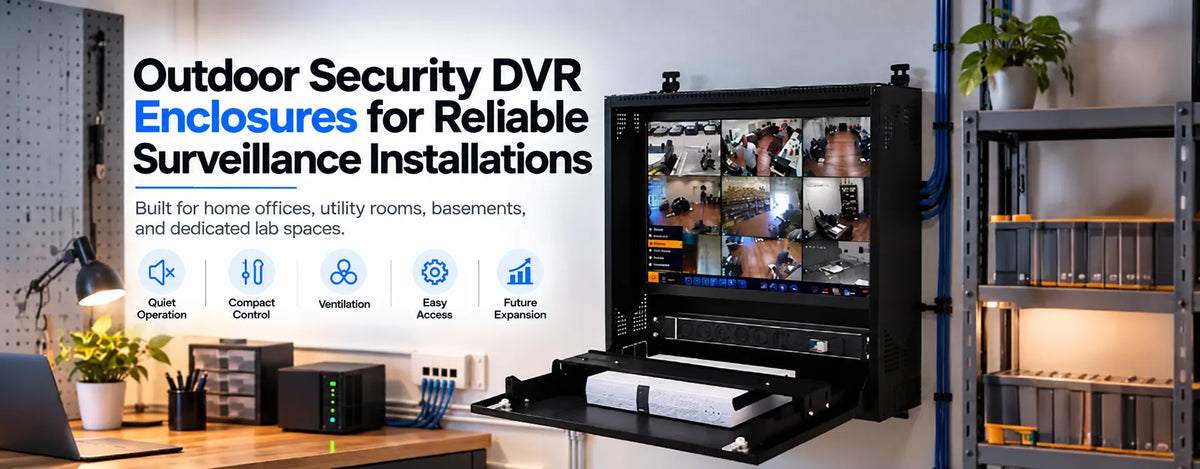
Outdoor Security DVR Enclosures for Reliable Surveillance Installations
Outdoor surveillance systems can fail even when the cameras are working correctly. Recorders, power supplies, network hardware, and cable terminations become vulnerable when they are installed in exposed locations without suitable physical protection. A weatherproof DVR box helps isolate recording equipment from rain, dust, accidental contact, and site-level environmental stress, while an outdoor DVR enclosure creates a defined service space for the hardware that keeps the security system running.
STURDX Outdoor Security DVR Enclosures are designed for projects where DVR, NVR, CCTV, and supporting network components need protected placement outside an equipment room. Select the enclosure around recorder dimensions, ventilation, cable routing, mounting location, access, and weather exposure—not simply the smallest box that fits.
Why Outdoor Recorder Protection Matters
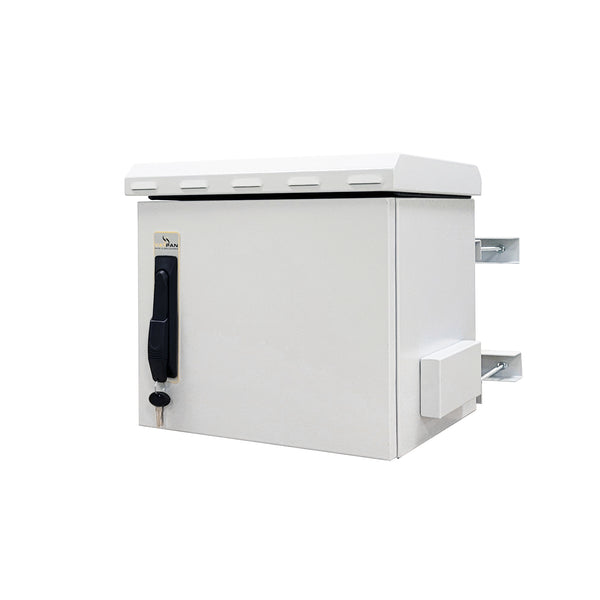
A recorder is often the storage and management center of a surveillance system. If an enclosure admits water, traps excessive heat, leaves cable entries exposed, or can be opened too easily, the installation can become vulnerable. An outdoor DVR box should therefore be treated as part of the system design. A weatherproof DVR box also needs to support maintenance, because protection that makes the recorder difficult to service can create new operational problems.
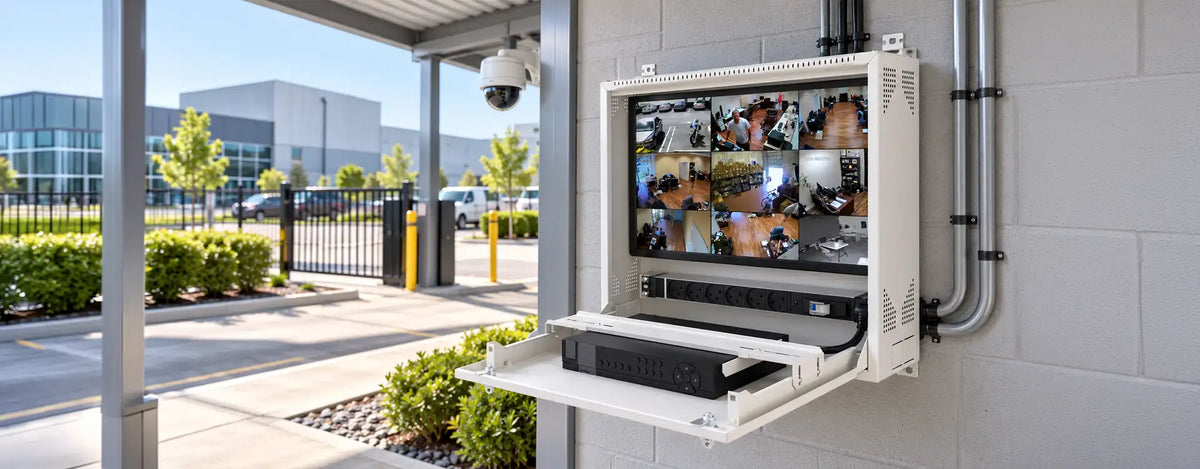
A security DVR enclosure may serve analog or hybrid systems, while an outdoor NVR enclosure may support IP camera networks. A CCTV DVR enclosure can share space with power supplies, surge protection, network switches, or fiber devices when the layout allows it. The cabinet must account for the complete hardware stack.
Core Selection Factors for an Outdoor Recorder Enclosure
Environmental Exposure
Location determines the protection level required. Equipment under a canopy faces a different risk profile from hardware installed on an exterior wall, pole, rooftop, parking structure, utility site, or industrial perimeter. A weatherproof DVR enclosure should be evaluated for water, airborne dust, sunlight, temperature swings, debris, and condensation risk.
For demanding sites, a weatherproof enclosure for DVR recorder hardware should be specified together with suitable cable glands, seals, and field-entry methods. A weather resistant enclosure for NVR system equipment also needs a thermal plan, because sealing electronics against the environment can reduce natural heat dissipation. In these conditions, another weatherproof DVR box may be appropriate only if its internal layout and cooling strategy match the recorder.
Internal Space and Service Clearance
Usable internal dimensions matter more than external appearance. The recorder needs room for connectors, power adapters, cable bend radius, airflow, and technician access. An outdoor enclosure for NVR and DVR equipment should leave enough working space that a hard drive, power supply, or network connection can be serviced without dismantling unrelated components.
A security camera equipment enclosure may also need a compact switch, PoE hardware, a PDU, or fiber termination. When several devices share one cabinet, organize power and data routes so maintenance remains clear. A correctly sized outdoor DVR enclosure should preserve service clearance as well as simple equipment fit.
Security and Controlled Access
Physical access matters because a recorder can contain both system controls and stored video. A lockable outdoor DVR enclosure can reduce casual tampering and create a controlled point of access for authorized personnel. The locking method should fit the site's operating needs without making routine maintenance unnecessarily difficult.
Physical enclosure design should sit alongside broader information-system controls. NIST SP 800-53 includes a Physical and Environmental Protection control family. Security teams can use the NIST Security and Privacy Controls for Information Systems and Organizations as a reference when aligning equipment protection with wider risk-management practices.
DVR vs. NVR vs. Hybrid Outdoor Enclosure Requirements
The enclosure should match the surveillance architecture. This comparison is a quick specification aid; the final choice should still be checked against the actual recorder and supporting hardware.
| Deployment Type | Typical Hardware | Primary Enclosure Concern | Planning Focus |
|---|---|---|---|
| DVR-based CCTV | DVR, power supply, analog camera connections | Cable density and recorder ventilation | Allow connector clearance and organized cable entry |
| NVR / IP surveillance | NVR, network switch, PoE equipment | Heat load and network cabling | Plan airflow, power, and Ethernet routing together |
| Hybrid surveillance | DVR/NVR, switch, converters, mixed cabling | Space and service complexity | Reserve expansion room and separate power/data paths |
| Remote security edge site | Recorder, router, switch, power components | Weather, access, unattended operation | Prioritize environmental protection and serviceability |
An outdoor CCTV DVR cabinet may require more analog cable-routing space, while an outdoor surveillance equipment cabinet supporting IP cameras may need additional thermal capacity for switches and PoE hardware. A CCTV equipment cabinet used for mixed devices should be sized for the complete system rather than the recorder alone.
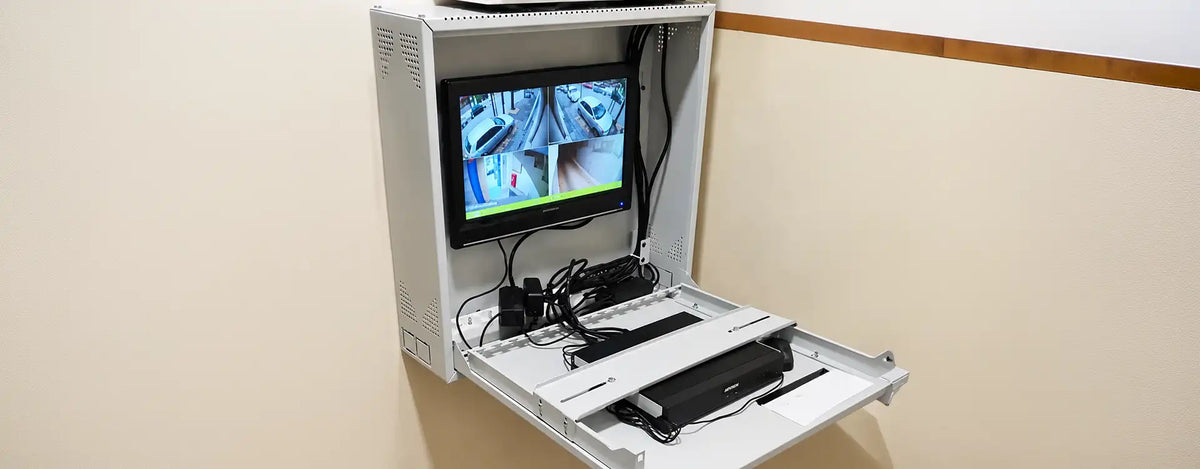
STURDXOutdoor DVR / NVR Enclosures
All outdoor enclosures →
Security Camera Cabinet
7U250 Weatherproof Outdoor Enclosure Cabinet – STV-HC-7U250
$699.00$1,000.00
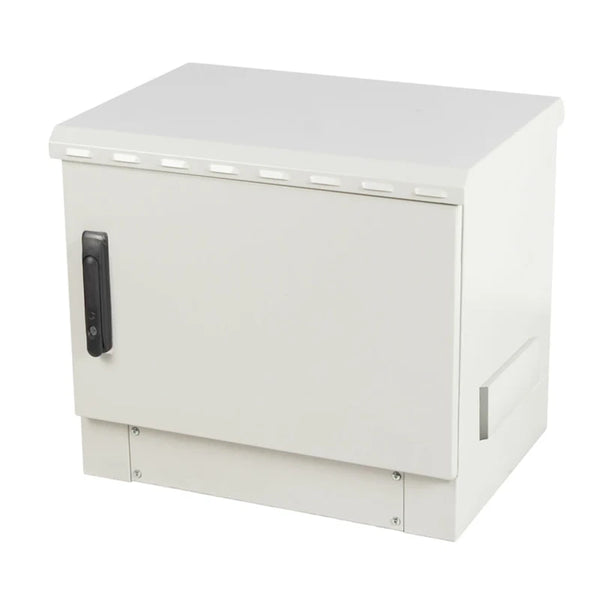
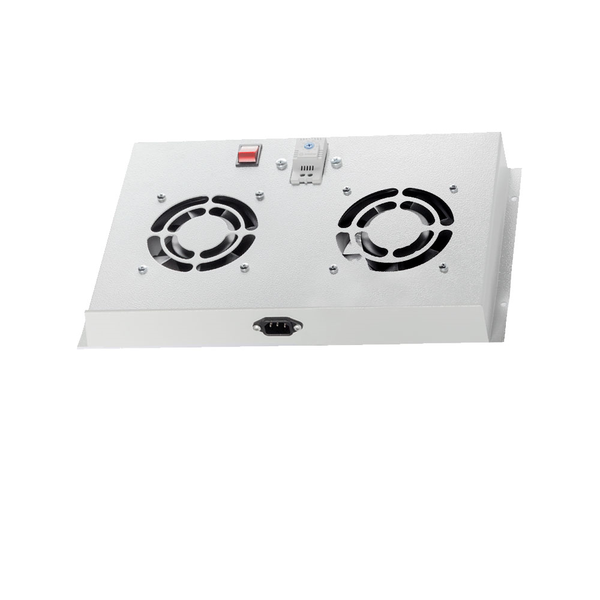
Cable Entry, Power, and Thermal Management
Cable-entry points are common weak spots. Camera, Ethernet, fiber, and power cables should enter through planned locations that preserve the enclosure's intended environmental protection. An outdoor security camera equipment box should avoid improvised openings that are difficult to seal or service.
The same applies to an outdoor cabinet for surveillance equipment in remote locations. Heat from recorders, drives, power supplies, and network devices must be considered against ambient temperature and solar exposure. Passive ventilation, filtered fans, or active cooling may be needed.
A weatherproof box for security camera recorder installations should also keep heat-producing hardware from crowding sensitive cable terminations. Good layout improves troubleshooting. A weatherproof DVR box that protects against rain but allows excessive internal temperature is not a successful enclosure solution.
Common Deployment Locations
Outdoor recorder protection is useful for parking lots, warehouses, construction sites, campuses, farms, industrial facilities, utility locations, and commercial perimeters. An outdoor enclosure for CCTV recording equipment may be placed close to the camera network when long cable runs to an indoor control room are impractical.
In these scenarios, a security camera recorder enclosure for outdoor use can consolidate critical hardware at the network edge. An outdoor DVR enclosure used this way must be planned for weather, power, service access, and cable organization from the beginning.
How Do I Protect a DVR Installed Outdoors?
To answer how do I protect a DVR installed outdoors, place the recorder inside a purpose-built enclosure matched to the expected weather exposure and leave room for cooling, cabling, and service. Use sealed cable entries, protect power connections, avoid direct water paths, and verify that internal temperatures stay within the recorder manufacturer's operating limits.
What Enclosure Should I Use for an Outdoor NVR?
For what enclosure should I use for an outdoor NVR, choose a cabinet based on the NVR's dimensions, heat output, Ethernet and power connections, and site conditions. If the NVR shares space with a PoE switch or other hardware, calculate the combined heat load and usable-space requirement.
Can a DVR Be Installed in a Weatherproof Enclosure?
Can a DVR be installed in a weatherproof enclosure? Yes, provided the enclosure is suitable for the environment and the installation manages heat, power, cabling, and maintenance correctly. A sealed cabinet can still create thermal problems if the equipment generates more heat than the enclosure can dissipate.
What Size Enclosure Do I Need for My DVR and NVR?
To determine what size enclosure do I need for my DVR and NVR, measure the actual equipment and add space for connectors, cable bend radius, power hardware, airflow, and hands-on service. Reserve extra capacity when expansion is likely. A second outdoor DVR enclosure should only be necessary when equipment separation or capacity makes it operationally preferable.
How Can I Protect CCTV Recording Equipment from Rain and Dust?
For how can I protect CCTV recording equipment from rain and dust, use an enclosure with environmental protection appropriate to the site, maintain sealed cable entries, keep doors and gaskets in good condition, and avoid field modifications that compromise protection. Installation orientation should also keep water away from openings, vents, and service points.
What Is the Best Outdoor Box for a Security Camera Recorder?
The answer to what is the best outdoor box for a security camera recorder depends on recorder type, available space, weather exposure, heat load, and security requirements. The best choice protects the full equipment stack while remaining serviceable. An undersized enclosure can create heat, cable, and maintenance problems.
Choose the Enclosure Around the Complete Surveillance System
A weatherproof DVR box should protect more than the recorder shell; it should support the way the surveillance system will actually be installed and maintained. Likewise, an outdoor DVR enclosure should provide enough space for the recorder, supporting power and network components, cable management, and the thermal strategy required by the site.
Before selecting a cabinet, document the hardware list, enclosure location, cable routes, weather exposure, power arrangement, and service needs. This makes it easier to compare sizes and avoid field changes after installation. A final weatherproof DVR box selection should reflect the complete surveillance system rather than a single device.
Compare recorder dimensions, supporting hardware, cable needs, and installation conditions before choosing an enclosure.
Find the Right Size for Your NVR/DVR Setup