
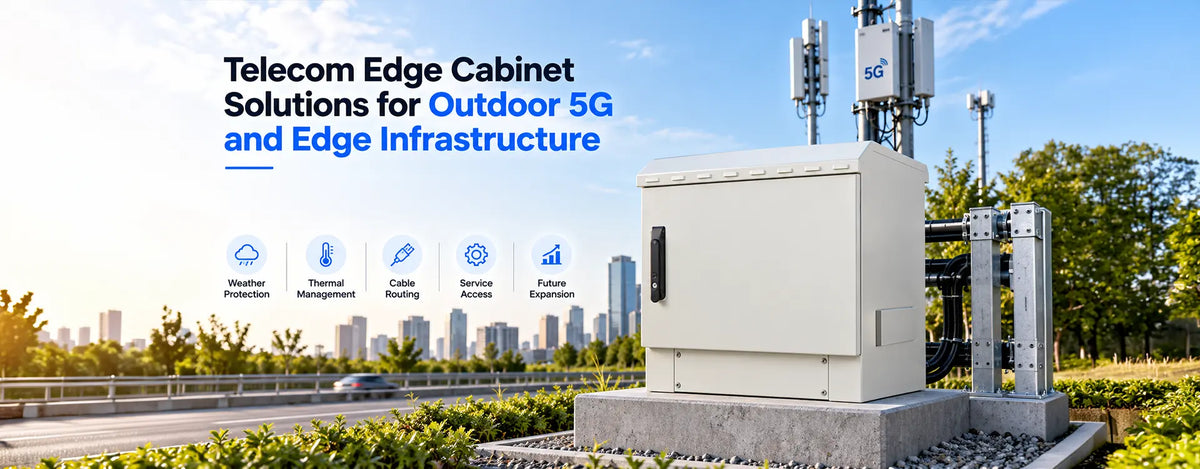
Telecom Edge Cabinet Solutions for Outdoor 5G and Edge Infrastructure
Telecom networks are moving more compute, switching, power, and connectivity hardware closer to where data is generated. That shift makes the physical enclosure a critical part of the deployment. A 5g outdoor enclosure must protect sensitive hardware while supporting cable routing, thermal management, maintenance, and future expansion. At the same time, a telecom network cabinet has to fit the actual equipment footprint and the environmental demands of the site.
STURDX Telecom Edge Cabinet Solutions are built around the needs of outdoor 5G, private network, fiber, IoT, surveillance backhaul, and distributed edge deployments. Whether a project requires an outdoor telecom enclosure, a telecom equipment enclosure, or a compact outdoor edge cabinet, the goal is to create a protected, serviceable environment around network-critical equipment.
Why Purpose-Built Outdoor Telecom Cabinets Matter
Outdoor telecom hardware faces conditions ordinary indoor IT racks are not designed to manage: rain, airborne dust, temperature swings, direct sun, condensation risk, unauthorized access, and exposed cable-entry points. A purpose-built outdoor network enclosure helps separate sensitive electronics from those conditions while giving technicians a controlled installation space.
The cabinet must also support field reality. Routers, switches, fiber termination, power supplies, backup components, and monitoring hardware may share the same enclosure. A telecom equipment cabinet should therefore be evaluated as infrastructure, not as a simple metal box. For projects that need a 5g network cabinet, selection should be coordinated with equipment dimensions, mounting requirements, heat load, incoming power, cable routes, and service access.
What Should a 5G Outdoor Enclosure Protect?
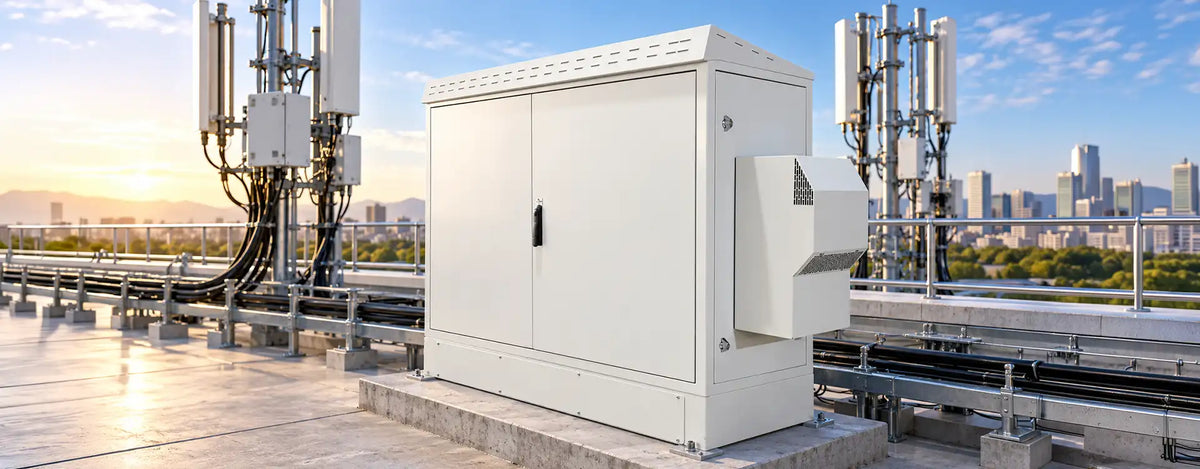
A 5g outdoor enclosure can house different combinations of networking and edge equipment depending on the application. Typical deployments may include switches, routers, fiber distribution hardware, industrial networking devices, compact servers, power components, or monitoring equipment.
The key is matching the cabinet to the workload. A weatherproof enclosure for 5g equipment should provide the physical protection required by the site while leaving enough room for installation and servicing. An outdoor cabinet for telecom equipment should not be selected only by external dimensions; usable depth, mounting layout, cable-entry locations, and cooling strategy can determine whether the finished installation is workable.
For exposed locations, an IP66 telecom network cabinet may be appropriate when the project requires strong protection against dust and water ingress. The rating should still be matched to the real installation environment and the selected cabinet configuration.
How Do I Choose an Outdoor Telecom Network Cabinet?
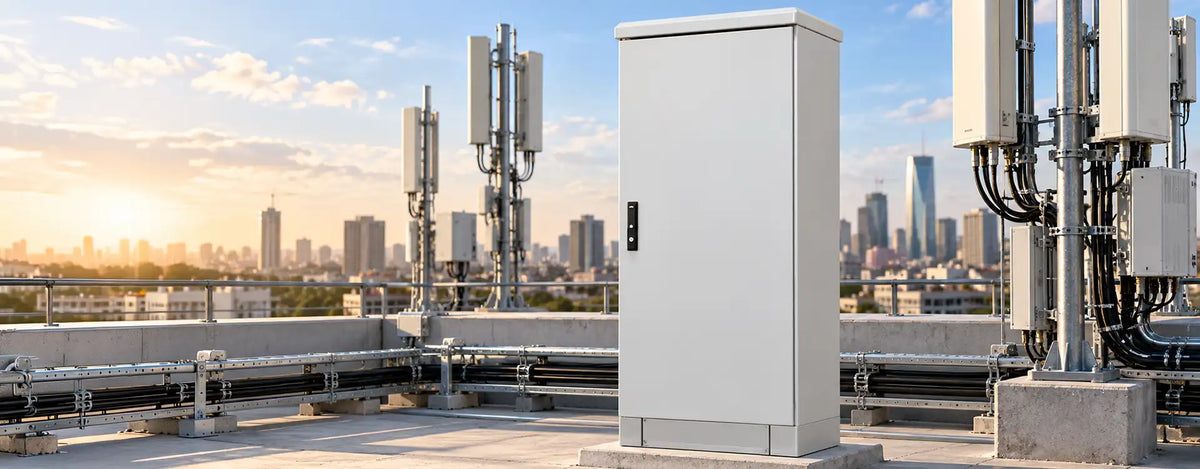
Start with the equipment list, not the cabinet size. Document each device, including dimensions, weight, mounting format, power requirement, heat output, connector orientation, and service clearance. Then account for cable bend radius, power distribution, grounding, airflow, and future additions.
A weatherproof telecom equipment cabinet should provide enough usable volume without creating unnecessary footprint or installation complexity. For a remote site, a telecom cabinet for remote network installations may also need secure access and a layout that lets technicians identify and service components quickly.
Projects that combine wireless connectivity with compute at the network edge may require an outdoor cabinet for edge computing equipment. Thermal management matters here because compact compute hardware can create considerably more heat than passive telecom components.
Environmental Protection and Installation Location
Site exposure should drive the specification. A cabinet mounted under cover has different requirements from one installed on a rooftop, roadside, utility pole, industrial yard, or open equipment pad. An outdoor enclosure for cellular network equipment should be selected after reviewing water exposure, airborne dust, temperature range, solar load, physical impact risk, and access conditions.
The same logic applies to an outdoor network cabinet for 5g infrastructure. Environmental protection only works when doors, seals, cable entries, ventilation components, and field modifications preserve the intended protection level.
Space, Mounting, Power, and Cable Management
The cabinet should leave enough room to install equipment cleanly and service it without removing unrelated components. An outdoor telecom cabinet should support logical separation between power, data, and fiber routes where practical, while maintaining access to connectors, PDUs, grounding points, and service loops.
An edge network enclosure should also allow reasonable expansion. If the initial deployment fills every usable position, a small future upgrade can force an expensive cabinet replacement or site rework.
Thermal Management at the Network Edge
Outdoor cabinets are affected by both internal heat and external ambient conditions. The correct cooling strategy depends on equipment load, enclosure rating, climate, solar exposure, and whether the cabinet can exchange air with the environment. Passive ventilation, filtered fans, heat exchangers, or active cooling may be appropriate in different installations.
Thermal planning should happen before equipment is installed. A cabinet that fits physically may still be unsuitable if internal temperatures exceed device operating limits. This is particularly important for an outdoor telecom cabinet supporting compute-heavy edge workloads.
STURDXOutdoor Telecom & 5G Edge Cabinets
All outdoor network cabinets →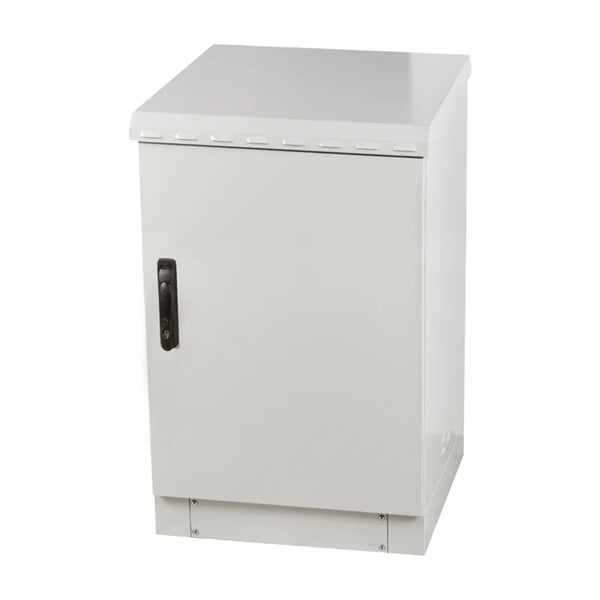
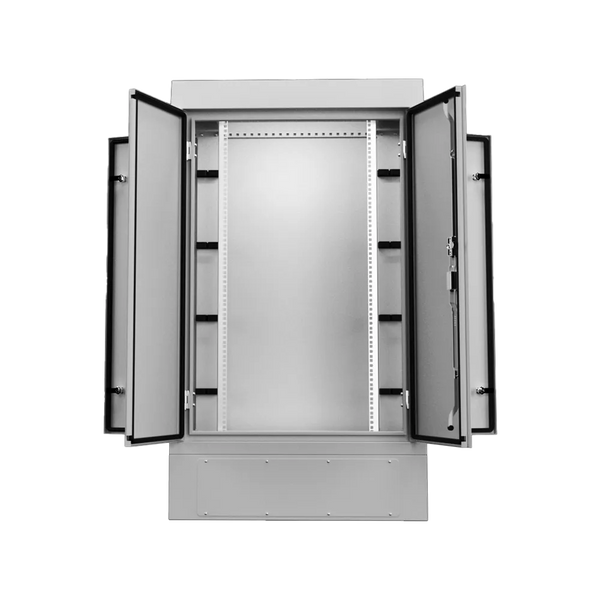
Fiber & Telecom
22U 19" Outdoor Fiber Optic Rack Cabinet Enclosure – 400mm Depth (16") | Weatherproof & IP66 Rated
$1,499.00$2,200.00
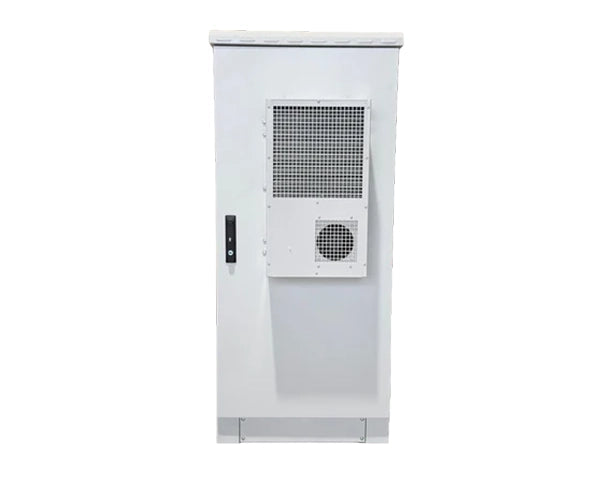
Thermal Management
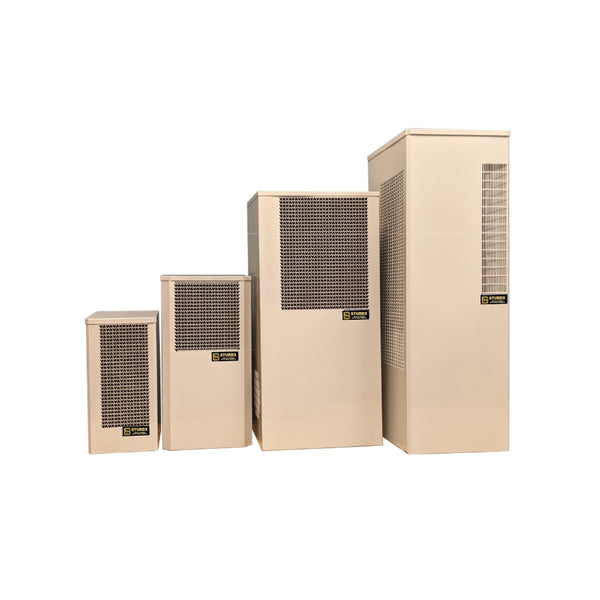
IP 65- NEMA 4- 4000BTU - Telecom Series Air Conditioners, Made in USA, STV-AN04
$3,500.00$4,500.00
Edge Computing, Private 5G, and Distributed Network Deployments
Edge architecture reduces the distance between users, devices, or machines and the compute resources processing their data. This can support low-latency applications, local processing, resilient connectivity, or reduced backhaul dependency. In physical deployments, however, the edge still needs protected infrastructure.
An outdoor cabinet for edge computing equipment can provide a dedicated field location for compact servers, network switches, power equipment, and connectivity hardware. A 5g outdoor enclosure may also be part of a private 5G deployment where network components need to sit close to a facility, production area, campus, or remote operating zone.
5G infrastructure design extends beyond physical protection. NIST's 5G Network Security Design Principles describes network infrastructure design principles for commercial and private 5G operators, including separation of different traffic types. Physical enclosure planning should complement, not replace, those network security controls.
Common Telecom Edge Deployment Scenarios
Cellular and 5G sites may use a weatherproof enclosure for 5g equipment where hardware must operate outside a traditional data room. Private networks in factories, warehouses, campuses, energy sites, and logistics environments may use a telecom network cabinet to create a defined physical boundary around network components. Remote fiber, industrial IoT, and communications backhaul sites may use a telecom cabinet for remote network installations to keep equipment accessible for maintenance while protected from weather and unwanted contact.
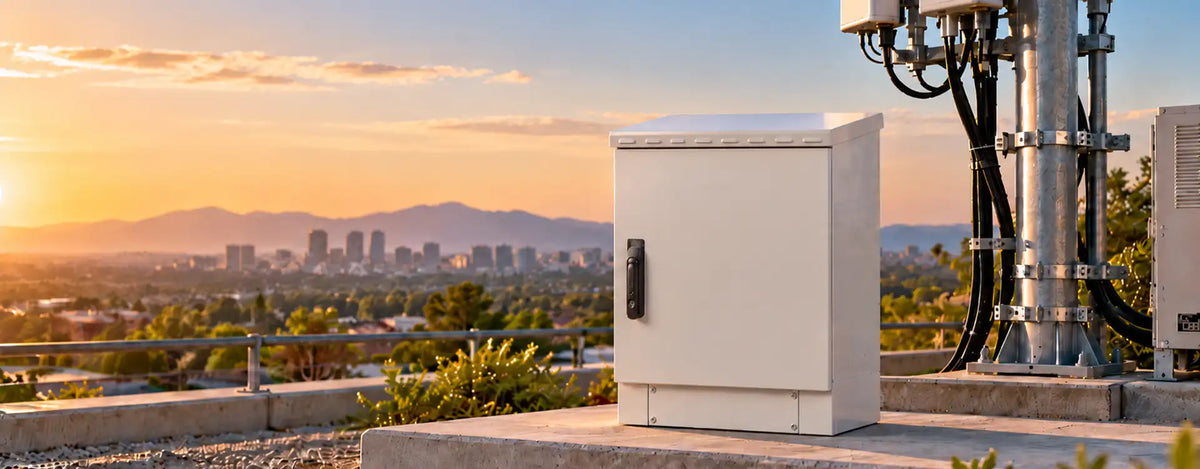
What Type of Outdoor Enclosure Is Best for 5G Equipment?
The best choice depends on environmental exposure, equipment heat load, physical dimensions, mounting method, and maintenance requirements. A 5g outdoor enclosure should be sized around the complete equipment stack and selected with an ingress-protection strategy appropriate to the installation. The goal is not simply to choose the highest rating, but to choose a cabinet whose protection, cooling, space, and access characteristics work together.
What Cabinet Should Be Used for Outdoor Telecom Equipment?
Use a purpose-built telecom enclosure that matches the equipment footprint and the environment. For many installations, a telecom network cabinet with suitable weather protection, secure access, structured cable entry, and enough internal depth is more appropriate than adapting an indoor rack. The final specification should reflect both current devices and realistic future expansion.
Which Enclosure Protects 5G Equipment from Weather?
For exposed locations, choose an enclosure whose environmental rating and construction fit the expected water, dust, and temperature conditions. An IP66 telecom network cabinet can be considered for projects requiring strong ingress protection, but cable glands, vents, cooling hardware, and field penetrations must preserve the intended protection level.
What Size Telecom Cabinet Do I Need for Outdoor Network Equipment?
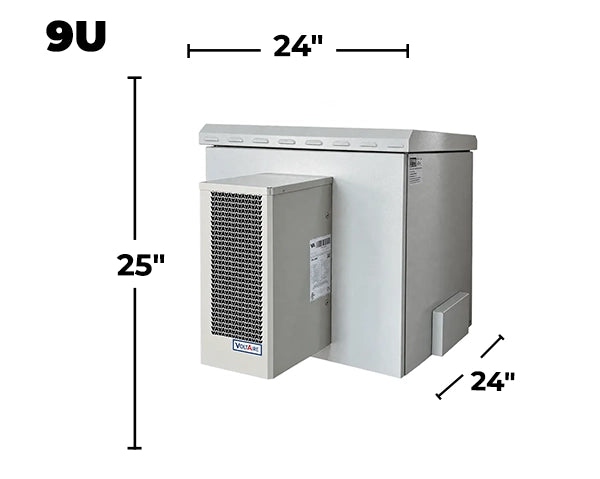
Calculate size from usable internal space rather than nominal external dimensions alone. Add the depth and mounting needs of each device, cable bend radius, power hardware, cooling clearances, and service access. Then reserve sensible expansion capacity. This produces a more reliable specification than choosing a cabinet only by U height or visual footprint.
What Is the Best Outdoor Cabinet for Edge Network Equipment?
The best outdoor cabinet for edge network equipment balances environmental protection, thermal performance, serviceability, mounting capacity, security, and future growth for the specific site. Edge workloads vary widely, so a cabinet suited to passive fiber hardware may not be suitable for compact servers or other high-heat devices.
Build the Cabinet Around the Deployment, Not the Other Way Around
A successful telecom edge installation starts with the equipment, environment, and service model. A 5g outdoor enclosure and telecom network cabinet should be selected as part of that complete deployment plan, not as an afterthought. STURDX can help project teams narrow cabinet dimensions and configurations for 5G, telecom, and distributed edge applications.
Share your deployment requirements to narrow the right enclosure size and configuration.
Request a Custom Quote for TelecomCompare cabinet sizes before finalizing the specification.
Download Dimension Guide