
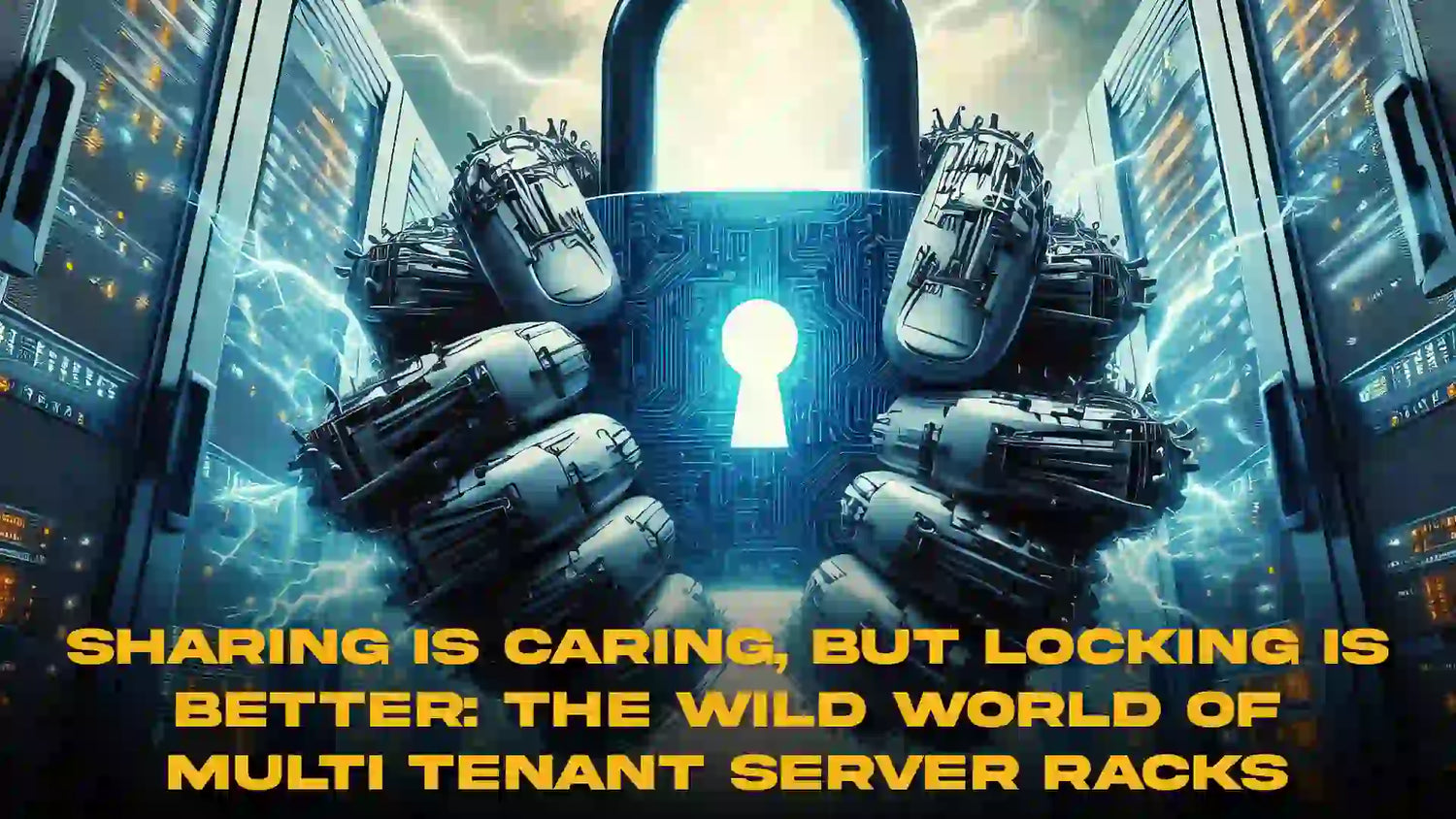
Sharing a space with roommates can be a total rollercoaster ride. One day they are baking cookies, and the next day they are accidentally using your expensive artisan shampoo or leaving their muddy shoes right in the middle of the kitchen floor. Now, imagine that same scenario, but instead of shampoo, your roommates have direct physical access to your company’s most sensitive financial data, customer records, and secret source code. Sounds like an absolute nightmare, right? Well, that is exactly the kind of anxiety that multi tenant data centers have to solve every single day in 2026.

As real estate inside premium data facilities gets tighter and more expensive, companies are increasingly forced to share space within the exact same metal enclosures. This has sparked a massive wave of interest in colocation server racks with secure partitioning. It is a brilliant bit of heavy duty engineering that allows two or three completely independent businesses to live inside the same 19 inch footprint without ever seeing or touching each other's hardware. It’s like turning a standard single family home into a sleek, ultra secure duplex apartment building where everyone has their own locked front door and separate utility meters.
The Ultimate Split: Dividing the 42U Kingdom
In a traditional data center setup, a single client usually rents a whole 42U cabinet. But for smaller startups, local internet service providers, or boutique retail brands, 42U is simply way too much space. They might only have two or three servers, meaning they’d be paying for a ton of empty, wasted air. To fix this budget killing problem, data centers are deploying split colocation racks 2 compartment 42U configurations.
This layout splits the giant cabinet right down the middle, creating two completely isolated 21U secure zones. Each half gets its own set of mounting rails, its own cable paths, and its own heavy duty locked door. It is the ultimate way to optimize space while keeping everyone's budget happy. "The demand for fractional rack space has exploded by nearly 40% over the last eighteen months," says a leading cloud infrastructure researcher in a recent 2026 multi tenant data report. It proves that businesses want the power of premium data centers but don't want to pay for space they aren't using.
Choosing the Crème de la Crème of Enclosures
When you are looking to set up a shared environment, you can't just throw any generic partition into a standard box. You have to actively hunt for the best split racks for multi tenant data centers to avoid massive security headaches down the road. A poorly designed divider can allow someone with skinny fingers to reach through the gaps and unplug their neighbor's switch!
The top tier models use solid steel solid mid baffles that are completely seamless, ensuring that there is absolutely zero physical or visual crossover between the compartments. It needs to be an absolute fortress. When a facility invests in the best split racks for multi tenant data centers, they are giving their clients a rock solid guarantee that their hardware is sitting in a safe, uncompromised sanctuary.

The Tech Behind Shared Security: Who Goes There?
The biggest hurdle in a shared cabinet situation is controlling who gets to open the doors. If Tenant A needs to replace a failed hard drive at 2 AM, they should only be able to open their specific half of the cabinet. This is why individual door access control for shared racks is the absolute backbone of multi tenant peace of mind. The days of standard metal keys are long gone, replaced by high tech smart locking systems that are connected directly to the network.
Smart Locks and Digital Breadcrumbs
These modern smart systems can be configured with biometric thumbprint scanners, RFID card readers, or one time digital pin codes sent straight to a technician's smartphone. Every single time a door clicks open, a digital log is created in the central system. Who opened it? What time did they arrive? How long was the door unlatched? This strict level of accountability is a vital part of meeting modern multi tenant server cabinet security standards.
If a technician tries to open the wrong door by mistake, the lock stays shut and an instant alert is sent to the network operations center. It completely removes the risk of "human error" or accidental tampering. "An un audited lock is a ticking time bomb in a shared facility," a veteran security auditor mentioned during a tech panel last month. It’s a very true statement. You need to know exactly who is touching the hardware at all times, no excuses.
Managing the Hidden Paths: Cable and Airflow Engineering
Once you solve the locking problem, you have to look inside the cabinet at the things you can't see from the outside. How do the cables get to each server without crossing paths? And how do we keep Tenant B's hot servers from cooking Tenant A's sensitive switches? This is where the engineering gets really clever and a little bit complicated.
Keeping the Wires Cross Free
You absolutely cannot have data lines or power cords running through another company’s secure zone. That would be a massive compliance disaster! Implementing secure cable routing in colocation cabinets involves building internal steel channels or side mounted runways that run vertically up the back of the rack. These channels are completely sealed off from the main server compartments.
This ensures that Tenant A's fiber lines run straight down to the floor or up to the ceiling without ever entering Tenant B's territory. It is a tidy, safe, and elegant way to handle high density wiring without creating a giant tangled mess of "digital spaghetti" that could lead to accidental disconnects during a routine maintenance check.
Breathing Easy with Separate Airflow
The other silent killer in a partitioned rack is heat. If the bottom compartment is packed with power hungry AI servers, all that blistering hot air naturally wants to rise up into the top compartment. Without independent ventilation for partitioned server racks, the top tenant’s equipment will quickly overheat and throttle its performance to save itself from melting.

To prevent this thermal drama, smart cabinets use specialized exhaust ducts and blanking plates that force the hot air out the back of each individual section immediately, rather than letting it drift upward. Combined with dual chamber network enclosures for ISPs, these systems ensure that each tenant gets a fresh, targeted blast of arctic air right into their server intakes. It is all about maintaining a perfect thermal balance so that nobody has to suffer because their neighbor is running a heavy workload.
Compliance and Peace of Mind for Providers
For internet service providers and managed service companies, being able to offer secure, fractional space is a huge competitive advantage. Utilizing dual chamber network enclosures for ISPs allows them to host multiple local businesses or client networks inside a single, highly efficient footprint. It cuts down on facility overhead while keeping every single network completely isolated on a physical layer.
Meeting the Strict Standards
When a business handles credit card data or healthcare records, they have to follow strict federal rules like PCI DSS or HIPAA. These regulations state that physical access to data storage must be heavily restricted and logged. By deploying cabinets that strictly adhere to multi tenant server cabinet security standards, providers can confidently help their clients pass these tough audits with flying colors.
● Audit Trails: Every entry log is saved in the cloud for easy reporting.
● Physical Isolation: Solid steel barriers prevent any unauthorized physical contact.
● Thermal Safety: Specialized ducting keeps every single server running at its optimal temperature.
Reclaiming the Shared Space
At the end of the day, sharing space doesn't have to mean sacrificing your privacy or your security. By embracing high quality colocation server racks with secure partitioning and insist on smart features like individual door access control for shared racks, businesses can enjoy the massive cost savings of co location without any of the traditional risks.
It is a wonderful time to be expanding your network. The technology is smarter, the steel is tougher, and the systems are more resilient than they have ever been before. Sturdx is leading the way by building the heavy duty, divided foundations that allow modern American businesses to grow together safely. So, don't be afraid to share a little bit of that rack space—just make sure you have a solid steel wall and a smart lock between you and your new neighbors!

Leave a comment
This site is protected by hCaptcha and the hCaptcha Privacy Policy and Terms of Service apply.