
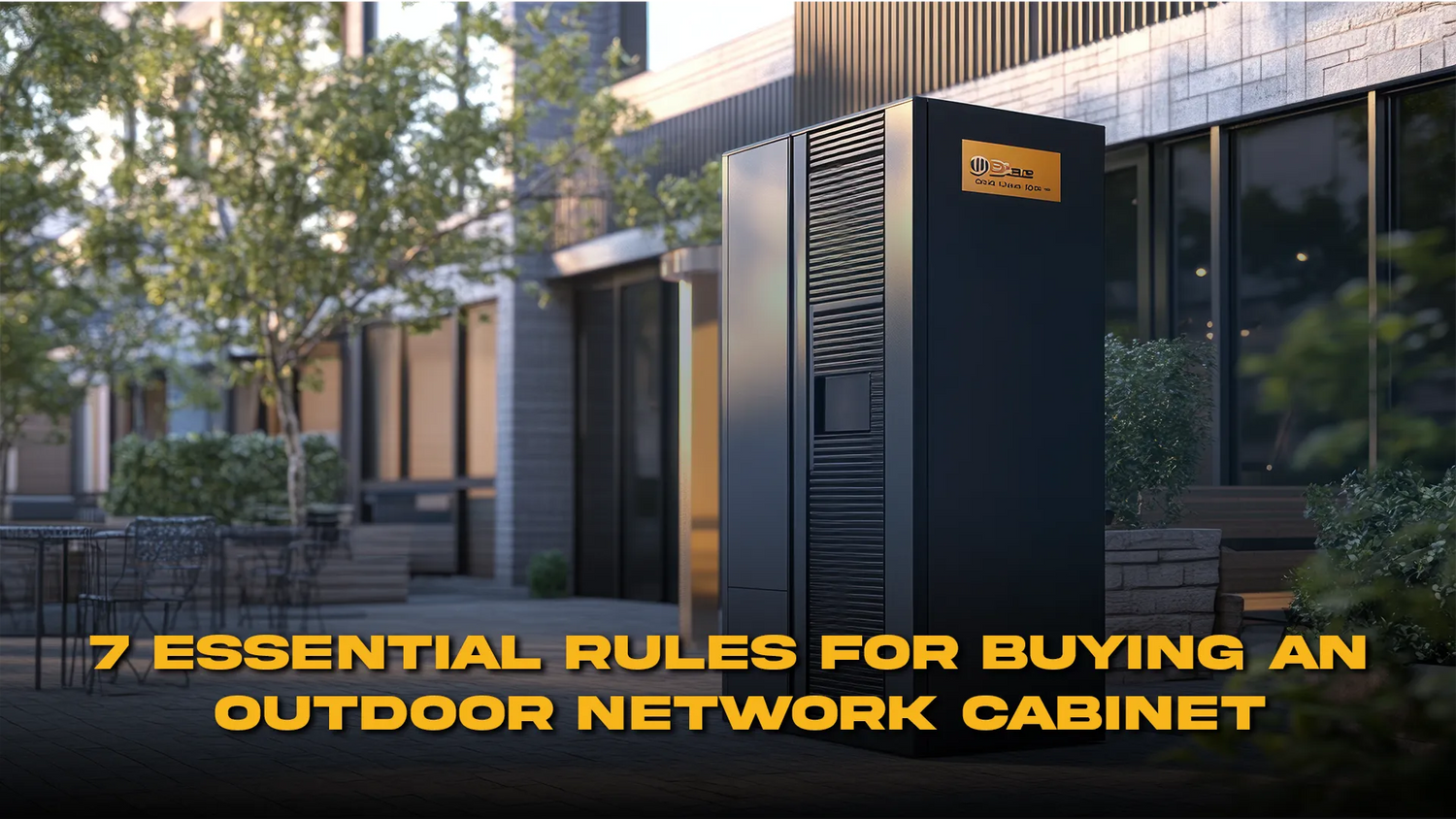
An outdoor network cabinet is the first real line of defense between harsh weather and your critical gear, so it deserves more than a quick catalog decision. An outdoor network cabinet that is chosen well will stabilize uptime, simplify maintenance, and protect your investment for a decade or more. Treating it as strategic infrastructure, not just metalwork, is what separates resilient networks from fragile ones.

This server enclosure buying guide walks through seven essential rules that keep you focused on what actually matters: rating standards, thermal design, mechanical integrity, security, and long term scalability. Each rule helps you filter the noise in specifications and marketing claims so you can build truly weatherproof IT infrastructure instead of just hoping the environment will be kind. Use these principles as a checklist before you sign any purchase order.
Rule 1: Start With the Real Environment
Every great server enclosure buying guide begins with the same question: what is the cabinet really going to face day after day? It is not enough to say “outdoor” and assume a generic level of risk, because a cabinet on a coastal pier, a highway median, and a sheltered roof all live in very different worlds and require different levels of protection.
Begin by mapping temperature extremes, rain intensity, wind exposure, dust or sand, pollution, and sunlight at each site. If your location is exposed to driving rain, road spray, or regular hose washdowns, IP66 rated cabinets quickly become the smart baseline instead of a nice to have. In gentler environments with partial shelter, lower ratings might technically work, but they leave far less safety margin when conditions turn ugly or the climate becomes more unpredictable.

Also consider how the environment can change over the life of the installation. New buildings, traffic patterns, or industrial activity may introduce salt, chemicals, or grit later on, even if they are not present at day one. Buying an outdoor network cabinet with slightly higher protection now is often far cheaper than relocating o r replacing it when the surroundings become more punishing.
Rule 2: Insist on the Right Protection Standards
Protection ratings are the language of any serious server enclosure buying guide, and understanding both IP and NEMA systems is essential. IP codes describe resistance to dust and water, while NEMA ratings add guidance around corrosion, ice, and specific environmental hazards, together defining whether your weatherproof IT infrastructure is truly ready for outdoor service.
For many networking and telecom deployments, IP66 rated cabinets strike an excellent balance between protection and cost. They keep out dust completely and withstand powerful water jets from any direction, covering exposure from storms to accidental hose spray in industrial yards or transportation corridors. When combined with NEMA 4 enclosure rules, you gain additional assurance that the cabinet can handle outdoor use, hose directed water, and external ice formation without compromising internal equipment.
In harsher or more corrosive locations such as coastal areas, wastewater plants, or chemical facilities, upgrading to NEMA 4X on top of IP ratings is often the smarter move. That extra “X” indicates enhanced corrosion resistance, which is vital when salt or chemicals in the air continuously attack surfaces and hardware over time. The more demanding your environment, the more these ratings evolve from box checking to non negotiable requirements that directly impact service life.
A short, focused list works well here:
- IP66 keeps enclosures dust tight and protected against powerful water jets from any direction.
- NEMA 4 defines indoor/outdoor use with protection from rain, splashing, and hose directed water.
- NEMA 4X adds corrosion resistance for aggressive marine and chemical environments.
Rule 3: Engineer Thermal Performance, Not Just Box Size
Too many outdoor projects still treat thermal design as an afterthought and focus only on height, width, and depth. A modern server enclosure buying guide puts thermal strategy at the center of the decision, especially as edge gear becomes more powerful and compact, because heat is the quiet killer of electronics and outdoor cabinets amplify that risk through solar load and stagnant air.
Start by estimating the total heat output of your equipment in watts, then compare it against the enclosure’s passive and active cooling capabilities. For modest loads and mild climates, passive ventilation with filtered vents may be enough to keep temperatures in range, but higher densities or hot regions often require integrated fans, heat exchangers, or even dedicated air conditioning to keep an outdoor network cabinet operating within manufacturer specifications.
Cold is the other side of the temperature curve that cannot be ignored. In low temperature environments, integrated heaters prevent equipment from dropping below safe operating ranges and help control condensation on internal surfaces. Weatherproof IT infrastructure that combines cooling and heating into a controlled micro environment avoids cycles of thermal shock and moisture that often cause intermittent field failures months after the original weather event.
Rule 4: Choose Materials for the Full Service Life
The shell of the cabinet is more than a cosmetic decision; it is a long term durability choice that will affect structural integrity, corrosion resistance, and appearance over many years. For many projects, powder coated steel offers a strong balance of mechanical strength, cost, and availability, especially when paired with suitable IP and NEMA ratings for outdoor use.
In locations with high corrosion risk such as marine, industrial, or heavily salted road environments, stainless steel or high grade aluminum often becomes the better option. These materials pair naturally with stricter NEMA 4 enclosure rules or 4X variants because they resist rust and surface degradation under continuous exposure to salt spray or chemical vapors, helping cabinets maintain performance and appearance for longer.
Color and finish also matter more than many buyers realize. Light, UV stable coatings reduce solar heat gain and protect the base metal from ultraviolet damage that can chalk or crack cheaper finishes over time, which can eventually compromise protection. When evaluating outdoor network cabinet options, ask about coating thickness, salt spray test results, UV exposure testing, and warranty coverage, not just the alloy name or marketing tagline.
A compact list can clarify material choices:
- Powder coated steel for general outdoor deployments where corrosion risk is moderate.
- Stainless steel for coastal, chemical, or high salinity sites with aggressive corrosion.
- Aluminum or composites where weight, RF transparency, or extreme corrosion resistance are priorities.
Rule 5: Design for Space, Growth, and Serviceability
A weatherproof IT infrastructure strategy that only fits today’s equipment list is already obsolete. You need space for growth, cable slack, accessories, and real world maintenance activities to keep expansion simple instead of painful, which is why planning 25–40% spare rack capacity over your initial configuration is often recommended.
Look closely at internal layout options when comparing models. Adjustable rails, mounting plates, and flexible cable entry points make it easier to keep power, fiber, and copper organized and separated, preserving bend radius and airflow. If you expect frequent patching or configuration changes, consider cabinets that support swing out racks or dedicated patch spaces, turning service into a fast, controlled process instead of a cramped struggle around bundles of cables.
Serviceability matters just as much as raw capacity. Wide door openings, removable panels, internal lighting provisions, and clearly marked grounding points save time on every site visit and reduce error risk. When you assess industrial rack selection options, imagine technicians working at night, in poor weather, with tight maintenance windows; cabinets that remain efficient and safe in that scenario quickly justify their premium.
Rule 6: Integrate Power, Monitoring, and Security
Modern outdoor infrastructure is not just about housing electronics; it is about orchestrating power, environmental visibility, and physical access in a unified design. As you narrow down your server enclosure buying guide shortlist, favor cabinets that are built to host power distribution, monitoring hardware, and security features from the start rather than forcing improvised solutions in the field.
Power integration begins with robust mounting and clear space for PDUs, surge protection, and, when needed, UPS or DC power systems. Some IP66 rated cabinets are engineered specifically to house rectifiers, inverters, or backup batteries alongside networking equipment, which simplifies wiring, reduces external boxes, and improves overall reliability. The more coherent your power layout is inside each enclosure, the easier it becomes to troubleshoot and standardize across sites.
Monitoring and security complete the picture. Outdoor network cabinet solutions that support door sensors, temperature and humidity probes, and even smoke or vibration sensing let you feed real time status into your management platforms, while rugged locking systems and tamper resistant hardware align with broader security policies. When field cabinets act as intelligent, monitored endpoints instead of passive metal shells, your weatherproof IT infrastructure becomes far more transparent and manageable.
A short checklist works well here:
- Power: PDUs, surge suppression, UPS or DC plant integration designed into the cabinet.
- Monitoring: temperature, humidity, and door sensors tied into your management systems.
- Security: robust locking, clear keying policy, tamper resistant hinges and hardware.
Rule 7: Partner With Vendors Who Understand Your Industry
Specifications tell only part of the story; real world experience fills in critical gaps that datasheets never cover. The final rule in any serious industrial rack selection process is to work with vendors who understand your vertical and have proven outdoor deployments in similar conditions, whether telecom, transportation, utilities, smart cities, or industrial automation.
A strong manufacturer or integrator will help you interpret IP ratings and NEMA 4 enclosure rules in the context of your precise use case and climate zone rather than leaving you to guess. They will also provide documentation, mounting kits, cable management options, and accessories tuned to common site types such as poles, pads, rooftops, and roadside cabinets, which reduces on site improvisation and installation errors.
Look for references, case studies, certifications, and long term product roadmaps when evaluating partners. IP66 rated cabinets that belong to a coherent product family make it easier to standardize across regions and generations of equipment, which simplifies stocking spares, training staff, and scaling your weatherproof IT infrastructure with consistent performance and appearance.
Turning Specifications Into Real World Resilience
Buying an outdoor network cabinet is ultimately an exercise in risk management and long term thinking rather than a quick hardware purchase. When you move carefully through these seven rules, you transform a simple line item into a strategic decision that directly influences uptime, safety, and operational cost across every remote site. You are not just choosing a box; you are defining the environment your critical gear will live in for years.
Treat every specification through the lens of reality at the site: weather patterns, contaminants, available power, physical access, and the true cost of downtime. Let those factors drive protection levels, materials, thermal strategy, internal layout, monitoring, and security so that each decision in your server enclosure buying guide reflects real risk instead of marketing hype.
As edge and field deployments grow in density and importance, truly weatherproof IT infrastructure becomes a core layer of your architecture, not a peripheral detail. The right industrial rack selection today reduces failures, simplifies operations, and preserves flexibility for tomorrow’s technologies and capacity demands. When your cabinets are engineered as carefully as the equipment inside them, your entire network stands on stronger ground and is far better prepared for whatever the environment delivers.

Dejar un comentario
Este sitio está protegido por hCaptcha y se aplican la Política de privacidad de hCaptcha y los Términos del servicio.