
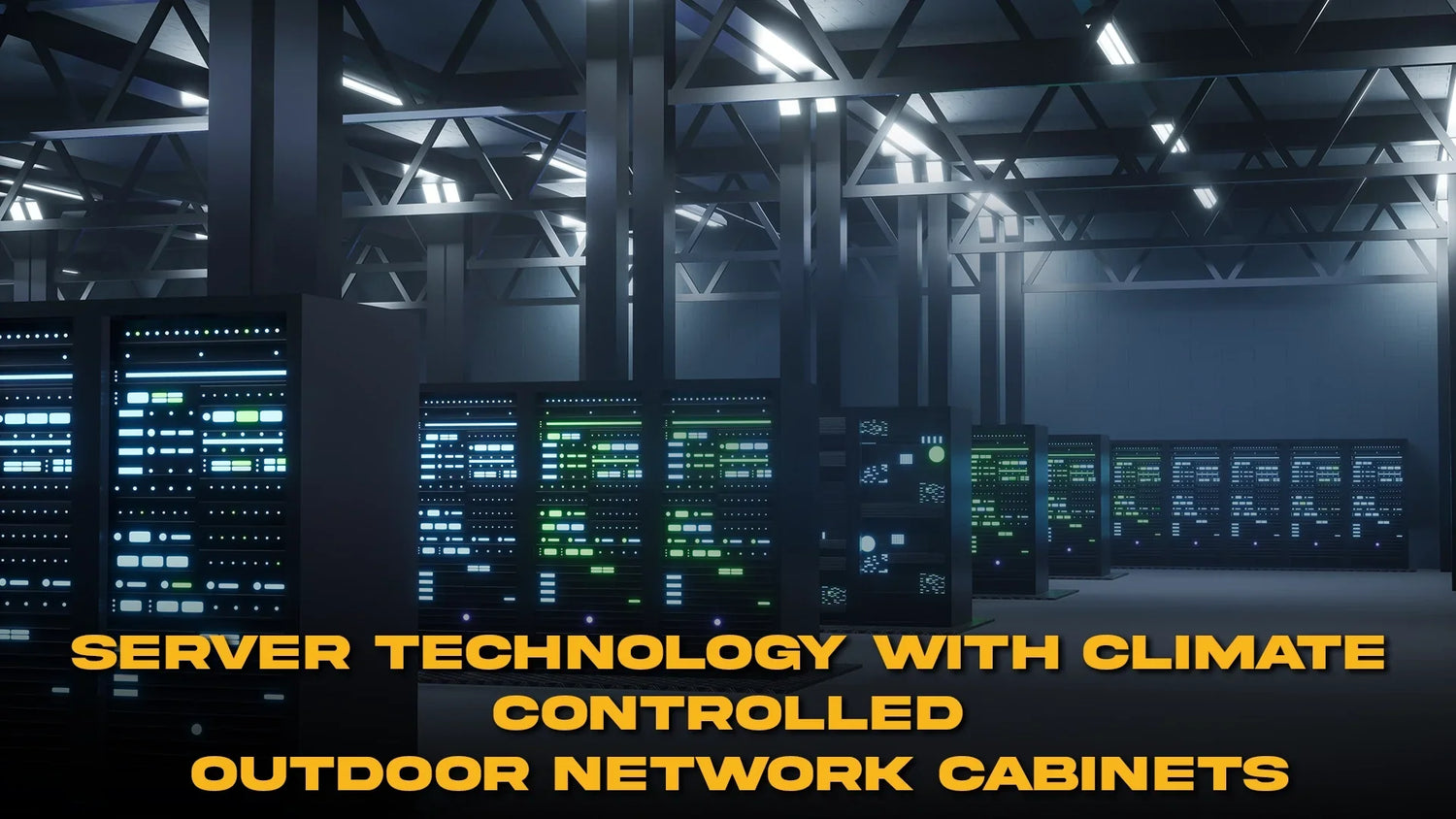
The blistering heat of a Texas summer or the bone chilling humidity of a coastal winter presents a brutal challenge for modern digital infrastructure. Investing in climate controlled outdoor network cabinets is no longer a luxury but a fundamental necessity for businesses operating in harsh environments. These rugged structures act as a protective suit of armor for the sensitive silicon hearts of our networks, ensuring that data keeps flowing even when the mercury rises to dangerous levels. It is a battle against the elements where the stakes are nothing less than total system uptime. When the sun beats down on a metal box in the middle of a remote field, the internal temperature can skyrocket within minutes, leading to catastrophic failure if the right precautions aren't taken.
The Invisible Enemy: Why Heat Is a Silent Killer
In the world of outdoor networking, heat is the ultimate villain, lurking quietly inside steel walls until it's too late. Most IT professionals eventually find themselves asking the critical question: do I need an air conditioned enclosure for my outdoor network equipment? The answer almost always depends on the "thermal load" of the devices and the peak ambient temperatures of the location. High end switches and routers generate their own internal warmth, and when trapped inside a sealed box under direct sunlight, they create a literal oven. Without preventing hardware overheating in outdoor racks, the lifespan of expensive equipment is cut in half, or worse, the system simply shuts down to prevent a fire. It’s a tragic sight to see a perfectly good piece of hardware toasted because of a lack of airflow.

Climate controlled outdoor network cabinets provide a sanctuary for these devices. By maintaining a stable internal temperature, they prevent the expansion and contraction of delicate circuit boards that leads to "solder fatigue." It’s like giving your servers a comfortable, air conditioned office in the middle of a desert. This stability is the secret sauce for long term reliability in the field. When a technician doesn't have to drive three hours into the mountains to reset a frozen router, the value of these systems becomes crystal clear.
Technical Guardians: NEMA and IP Ratings Explained
The selection process for appropriate enclosures becomes difficult because engineers face an overwhelming amount of technical terms which create confusion. The industry maintains a highly debated argument between NEMA 4X and IP66 standards which determine equipment performance during heat dissipation and environmental protection. The two standards provide exceptional protection against dust and driving rain but they differ in their methods for handling thermal exchange. An IP66 cabinet is essentially air tight, which is great for keeping out the rain but terrible for letting out heat naturally. This is why climate controlled outdoor network cabinets often require integrated cooling units to bypass the limitations of the metal shell itself.
The material of the cabinet also plays a huge role in how it interacts with the environment. Aluminum reflects a good portion of solar radiation, while stainless steel offers unmatched corrosion resistance in salty, coastal air. However, regardless of the material, the sun will eventually win if there isn't an active system fighting back. Sturdx designs their cabinets with these specific challenges in mind, ensuring that the physical barrier is just the first line of defense. Utilizing climate controlled outdoor network cabinets means you aren't just relying on a thick piece of metal to save your data; you are employing an active thermal management strategy.
Active Cooling Strategies for Remote Locations
When passive vents and heat sinks fail to do the job, it is time to bring in the big guns. There are several remote site server cooling solutions available today, ranging from simple fan kits to sophisticated compressor based air conditioners. For smaller setups where a full AC unit might be overkill, thermoelectric cooling for network boxes offers a solid middle ground. These solid state devices have no moving parts, making them incredibly reliable in dusty environments where a traditional compressor might get clogged. They use the Peltier effect to "pump" heat out of the cabinet, keeping the interior cool enough to prevent a meltdown.

However, for high power installations, nothing beats weatherproof cabinet active cooling through a dedicated AC unit. These units are specifically designed to be mounted on the side of a rack and can handle extreme outdoor temperatures while keeping the inside at a crisp 70 degrees. It’s truly amazing to stand in a 100 degree field and open a cabinet to feel a breeze of cold air hitting your face. Using climate controlled outdoor network cabinets with integrated AC units ensures that even the most power hungry AI or 5G equipment stays within its operating parameters.
Precision Engineering: The Cooling Calculation
One does not simply pick a cooling unit at random and hope for the best. A proper outdoor server rack cooling calculation is essential to ensure the system is neither underpowered nor wastefully over engineered. This calculation takes into account the total "British Thermal Units" (BTU) generated by the equipment, the surface area of the cabinet, and the maximum expected outdoor temperature. If the math is wrong, the cooling unit will run constantly, leading to premature wear and high energy bills. Precision is the name of the game here.
Many engineers forget to factor in "solar gain," which is the heat added by the sun hitting the cabinet directly. In some cases, the sun can add as much heat as the servers themselves! This is why climate controlled outdoor network cabinets are often painted in light colors or equipped with solar shields. It’s all about reducing the load on the cooling system so it can do its job more efficiently. By getting the outdoor server rack cooling calculation right from the start, a company saves a massive amount of headache down the road.
The Future of Outdoor Infrastructure
As we move further into 2026, the demand for localized data processing is only going to grow. We will see more climate controlled outdoor network cabinets popping up in places we never expected, on top of traffic lights, at the base of cell towers, and even in remote agricultural fields. These cabinets are the silent sentinels of our connected world. They allow us to put computing power exactly where it is needed, without worrying about the weather report. Sturdx is at the forefront of this movement, helping businesses build a more resilient and distributed network.

The peace of mind that comes with knowing your hardware is safe is priceless. Outdoor network cabinets with climate control protection enable their owners to stay relaxed during storms and heatwaves. They know their equipment is protected by a system that is constantly monitoring and adjusting to the environment. The combination creates a stunning design which unites durable metal components with advanced thermal management solutions.
Why Integrated Solutions Are the Best Path Forward
In the past, many folks tried to "DIY" their cooling by cutting holes in standard boxes and mounting off the shelf fans. This almost always leads to leaks, dust intrusion, and eventually, equipment failure. The modern approach is to use factory integrated climate controlled outdoor network cabinets. These units are tested as a single system, ensuring that the IP rating remains intact even with the cooling unit running at full blast. It prevents the "oops" moments that happen when a custom made hole starts leaking during a summer thunderstorm.
Furthermore, weatherproof cabinet active cooling systems today are smarter than ever. They often come with remote monitoring capabilities, so an IT manager can check the internal temperature of a cabinet from their smartphone while sitting at home. If the temperature spikes, they get an alert immediately, often preventing hardware overheating in outdoor racks before any permanent damage occurs. This proactive approach is the hallmark of a professional grade operation.
Final Thoughts on the Outdoor Digital Shift
The world is moving outside the traditional office, and our servers are going with it. The question of "do I need an air conditioned enclosure for my outdoor network equipment" is becoming a standard part of every network planning meeting. With the right climate controlled outdoor network cabinets, the "great outdoors" is no longer a forbidden zone for sensitive technology. It is a frontier waiting to be settled by smart, ruggedized infrastructure.
By investing in high quality remote site server cooling solutions, companies are not just buying a box; they are buying insurance for their most valuable digital assets. Whether it is through thermoelectric cooling for network boxes or heavy duty AC units, the goal remains the same: keep the bits moving and the hardware cool. The future is bright, it is hot, and thanks to climate controlled outdoor network cabinets, we are ready for whatever the weather throws our way.


Dejar un comentario
Este sitio está protegido por hCaptcha y se aplican la Política de privacidad de hCaptcha y los Términos del servicio.