
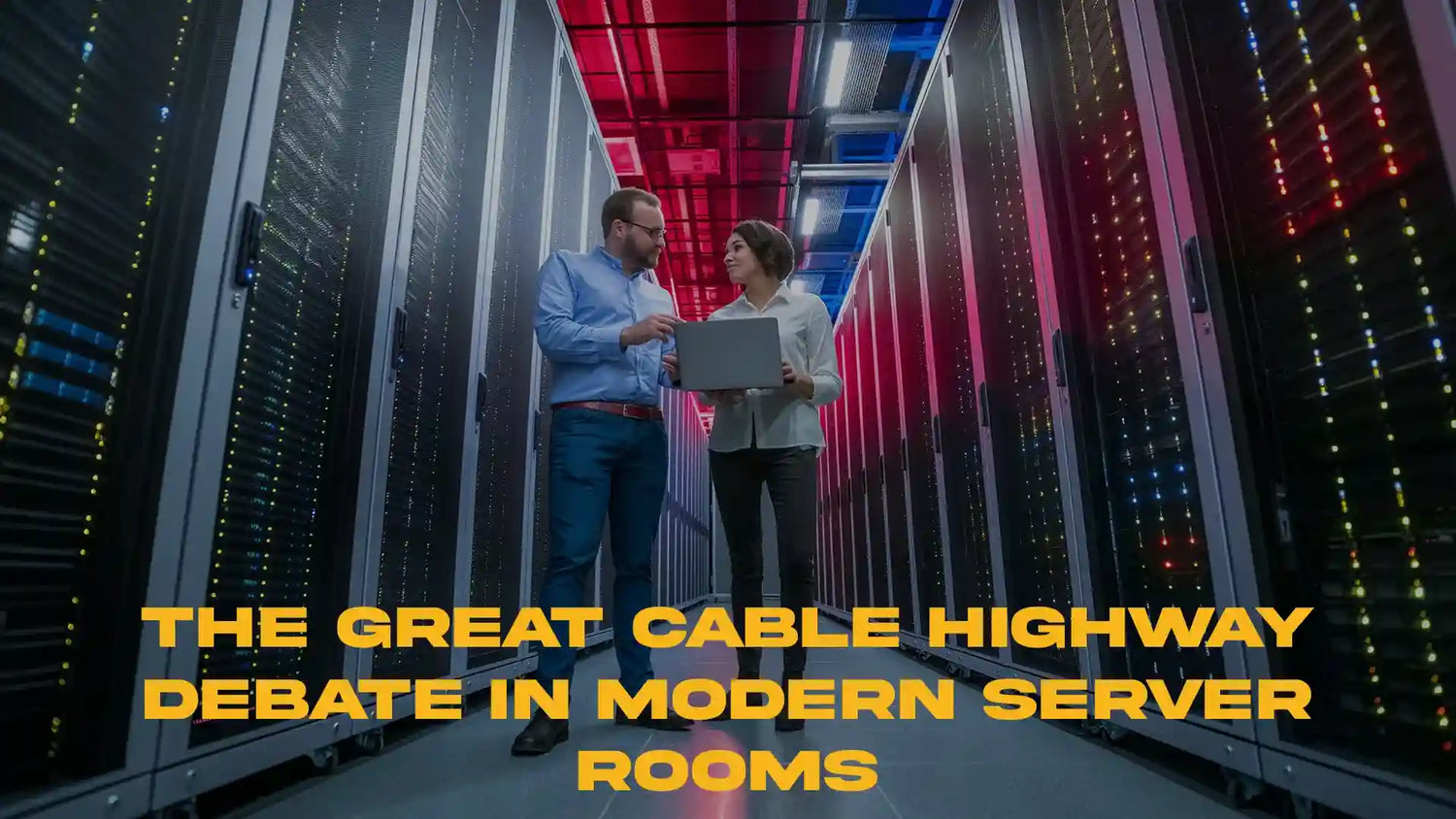
Managing a server room can sometimes feel like trying to organize a giant playground filled with hundreds of energetic toddlers. Everything is moving fast, running hot, and if anyone lets their guard down for a single second, a chaotic mess is bound to happen. In 2026, as high performance computing and massive AI clusters crowd our racks, the way data cables are routed is becoming a major make or break decision for businesses. It is a classic crossroads: do you hide the wire jungle under the floor, or do you let it run proud and free above the cabinets?

The ongoing discussion about overhead cable runway vs underfloor routing is not just about aesthetics or making the room look pretty for a photo op. It is a high stakes decision that directly impacts how well your equipment breathes and how fast technicians can fix a broken line during a 3 AM emergency. It is honestly heart breaking to see a beautiful, multi million dollar data facility choking on its own connectivity because the pathways were planned upside down.
The Dark Depths: The Reality of Underfloor Routing
For decades, the standard way to build a serious server room was to put everything under a raised floor. It seemed like a brilliant idea at the time—out of sight, out of mind, right? You just lift up a tile, toss the cables underneath, and the room looks instantly immaculate. But as networks grow larger and denser, those dark crawlspaces are turning into absolute traps for data center managers.
The Problem with Hidden Obstructions
When you stuff hundreds of thick copper and fiber lines beneath the floor, you create a major raised floor airflow obstruction from network cables. In most traditional setups, that underfloor space is supposed to act as a cold air plenum, pushing chilled air up into the server intakes. If that space is completely blocked by a tangled nest of old wires, the cold air simply can't move. It’s like trying to blast the air conditioning in your car while the vents are stuffed with thick woolen socks.
This brings us to the major disadvantages of underfloor cable management that people are dealing with this year. Over time, old cables get abandoned because it is too hard to fish them out of the dark. These "ghost cables" sit there forever, blocking the breeze, trapping dust, and creating a sneaky fire hazard that nobody can see until it's too late. "We recently pulled out three tons of dead copper from under a client's floor, and their cooling efficiency instantly shot up by 25 percent," noted a leading infrastructure auditor in a 2026 tech panel.

Looking Skyward: The Rise of the Overhead Cable Runway
Because the subfloor is getting so crowded, the industry is experiencing a massive shift toward looking upward. A modern high density overhead network routing architecture keeps all the data pathways completely separate from the cooling system, allowing the room to function exactly how it was designed to. It is a much more breathable, flexible, and friendly layout for everyone involved.
Why the Ceiling Is the New Hero
By utilizing data center structural ceiling cable trays, you are building a clear, visible highway system for your data. If a technician needs to trace a specific line, they don't have to get down on their hands and knees with a flashlight and a crowbar to lift heavy floor tiles. They can just look up and see the whole pathway laid out like a roadmap. It makes maintenance so much faster and reduces the risk of someone accidentally stepping on a delicate fiber line while crawling around in the dark.
These ceiling hung systems are incredibly robust, handling massive bundles of heavy duty network wires without breaking a sweat. Implementing a high density overhead network routing architecture means your facility is ready for the future, allowing you to add new lines or upgrade to faster fiber speeds without disrupting the airflow pattern down below. It’s a total game changer for peace of mind.
Choosing Your Tools: Ladders vs. Baskets
Once the decision is made to go overhead, the next step is picking the right style of tray for the job. The two heavyweights in this arena are ladder racks and wire baskets. They both have their unique superpowers, and getting them to work together is a bit of an art form.
Climbing the Ladder Systems
For the heavy duty runs that carry the main backbone of the network, ladder rack systems for server enclosures are the absolute gold standard. These structures look exactly like steel ladders laid flat, providing an incredibly strong platform for massive cable bundles. They give you plenty of open space to secure the wires with Velcro ties and allow cables to drop down directly into the top of the cabinets with smooth, curved drop outs that prevent any nasty kinks.

Using sturdy ladder rack systems for server enclosures ensures that there is zero sagging, even when you are running hundreds of Category 6A or thick power cables across the room. It looks neat, feels solid, and gives the whole room a very industrial, reliable vibe that screams high performance.
The Flexibility of the Wire Basket
For more intricate layouts where you need to bend around corners or change elevations quickly, finding a good server room cable basket installation guide is your best bet. Wire baskets are made of welded steel mesh, and they are incredibly easy to cut and shape right on site. It’s like playing with a giant, high tech erector set.
A comprehensive server room cable basket installation guide will show you how to create smooth turns and intersections without creating sharp edges that could slice into sensitive insulation. These baskets are perfect for distributed fiber runs because they support the cables along their entire length, keeping everything safe and cozy as the data zips across the room.
The Ultimate Payoff: Better Cooling and Less Stress
At the end of the day, the biggest reason to choose overhead pathways is the dramatic impact it has on your electric bill and your system uptime. Focus is shifting heavily toward optimizing data center cooling with top of rack routing because energy costs are skyrocketing in 2026. When you move the cables to the ceiling, you leave the floor completely clear for pure, unobstructed cold air.
The Magic of Top of Rack Architecture
When you combine an overhead runway with an strategy for optimizing data center cooling with top of rack routing, the results are truly magical. The cold air flows freely from the floor tiles into the server inlets, while the heat is pushed out the back and pulled away into the ceiling return plenum without any interference. It’s a perfect, harmonious cycle of thermal dynamics.
"By clearing the subfloor and running cables over the top, our facility dropped its PUE from 1.8 to a crisp 1.35 in less than a month," reported a data center manager in a recent infrastructure survey. That is a massive chunk of change saved, just by changing the way the wires run! It proves that solving the overhead cable runway vs underfloor routing puzzle correctly is one of the smartest investments a business can make.
Planning Your Next Move: Don't Get Tangled
If you are looking at a messy, hot server room right now and feeling completely overwhelmed, don't panic. You don't have to fix everything in one afternoon. Start by auditing what you have under the floor. If you find a lot of raised floor airflow obstruction from network cables, it might be time to plan a phased migration to an overhead system.
● Audit First: Identify and label every active line before you start moving things around.
● Velcro Only: Never use plastic zip ties on data cables; they pinch the wires and create signal loss.
● Leave Room to Grow: When installing data center structural ceiling cable trays, always buy a size larger than you currently need.
● Clean as You Go: Pull out old, dead copper immediately so it doesn't become a ghost in your system.
A Friendly Final Word
Building a great network is about more than just buying the fastest switches or the biggest servers; it is about creating a safe, sustainable home for them to live in. Avoiding the disadvantages of underfloor cable management by moving your pathways to the sky is a massive step toward a more reliable, efficient future.
Sturdx is always here to provide the rugged enclosures and top of rack brackets needed to make this transition as smooth as possible. So grab your label maker, take a deep breath, and look up! The future of your server room is waiting in the ceiling, and it is looking brighter—and a whole lot cooler—than ever before.



Leave a comment
This site is protected by hCaptcha and the hCaptcha Privacy Policy and Terms of Service apply.